The Supreme Court has reserved its verdict on a petition challenging the Special Intensive Revision (SIR) of electoral rolls in Bihar, following arguments from various lawyers and the Election Commission of India.

A new report indicates a rise in 'red alert' constituencies in the West Bengal Assembly elections, with a significant number of candidates facing criminal charges.

The Supreme Court has directed the Election Commission to address typographical errors and other mistakes in the final Bihar electoral roll. The court will hear further arguments on November 4.
The Supreme Court of India resumed hearing petitions challenging the Special Intensive Revision of electoral rolls in Bihar, addressing the use of Aadhaar and concerns about voter deletions.
The Supreme Court is scheduled to hear on March 18 a plea seeking to debar from polls, candidates charged with serious offences. The plea, filed by advocate Ashwini Kumar Upadhyay, seeks directions to the Centre and the Election Commission of India (ECI) to restrain such candidates put on trial for serious offences. The plea alleges that despite recommendations of the Law Commission of India and court's previous directions, the Centre and the ECI did not act. The plea also highlights the increasing number of MPs with declared serious criminal cases since 2009, with one MP declaring 204 criminal cases against him, including culpable homicide, house trespass, robbery, criminal intimidation, etc. It claims that political parties are competing with each other in a race to the bottom as they couldn't afford to leave their competitors free to recruit persons with criminal antecedents.

The Supreme Court has directed the Election Commission to provide details regarding the approximately 65 lakh voters removed from the draft electoral rolls in Bihar, a state preparing for elections. The court's order comes in response to a petition filed by an NGO challenging the Election Commission's Special Intensive Revision of electoral rolls.
The Election Commission defended its Special Intensive Revision (SIR) exercise for Bihar's voter list in the Supreme Court, calling it accurate and dismissing allegations of impropriety by political parties and NGOs.

The Supreme Court has directed the Bihar State Legal Service Authority to assist voters excluded from the final electoral rolls in filing appeals with the Election Commission.

A report by the Association for Democratic Reforms (ADR) reveals that a significant number of registered unrecognised political parties in Bihar have not made their mandatory financial disclosures public for 2023-24.
The Supreme Court has requested the Election Commission to respond to petitions challenging the Special Intensive Revision of electoral rolls in Tamil Nadu and West Bengal. The court has also asked the Madras and Calcutta High Courts to keep proceedings on similar petitions in abeyance.

The NGO challenges the validity of a provision of the Chief Election Commissioner and Other Election Commissioners Act, 2023.

"There is bound to be revision," the top court said, "otherwise, how will the poll panel delete the names of those who are dead, migrated or shifted to other constituencies?"

A bench of Justices Surya Kant and Joymalya Bagchi is likely to take up the matter in which the EC has justified its ongoing SIR of electoral rolls in Bihar, saying it adds to the purity of the election by "weeding out ineligible persons" from the electoral rolls.
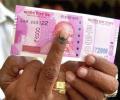
Following is the chronology of events in the case related to validity of the electoral bonds scheme, a mode of funding to political parties, in which a five-judge Constitution bench of the Supreme Court on Thursday delivered a landmark verdict annulling it.

Underscoring the 'presumption of genuineness' of Aadhaar and voter ID, the Supreme Court on Monday refused to stay the publication of draft electoral rolls in poll-bound Bihar and said it would once and for all decide pleas against Election Commission's special intensive revision (SIR) of electoral rolls.
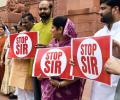
The Supreme Court has warned that it will set aside the special intensive revision (SIR) of electoral rolls in Bihar if any illegality is found. The court is reviewing the validity of the Bihar SIR and its potential impact on a similar exercise across India.

The Supreme Court has stated it will intervene if there is mass exclusion in the special intensive revision of electoral rolls in Bihar, emphasizing the Election Commission's role as a constitutional authority.
The Supreme Court of India has asked petitioners in two Public Interest Litigations (PILs) to make representations to the Election Commission of India (ECI) regarding their demand for uploading polling booth-wise voter turnout data on the ECI website. The PILs, filed by TMC MP Mahua Moitra and NGO Association for Democratic Reforms, seek a direction for the ECI to upload the data within 48 hours of the conclusion of polling in Lok Sabha and assembly elections. The ECI, represented by senior advocate Maninder Singh, expressed willingness to deliberate on the matter and suggested a meeting with the petitioners to address their concerns. The court has adjourned the hearing to the week of July 28.

The government rejected the Opposition's demand for a discussion on electoral roll revision in Bihar, citing that the matter is sub judice and pending before the judiciary.
The Supreme Court has begun hearing petitions challenging the Election Commission's decision to conduct a special intensive revision exercise in Bihar ahead of elections, raising concerns about voter exclusion.
The Supreme Court of India has scheduled a hearing on February 19 for pleas challenging the appointment of the Chief Election Commissioner and Election Commissioners under the 2023 law. The court emphasized the potential consequences if any action is taken before the hearing. The pleas argue that the 2023 law, which excludes the Chief Justice of India from the selection panel, undermines the independence of the Election Commission and allows for undue influence from the executive branch. The court's earlier verdict in March 2023 called for an independent selection panel comprising the Prime Minister, Leader of the Opposition, and the Chief Justice of India to ensure the integrity of the Election Commission. The case highlights concerns about the independence of India's electoral process and the potential for political influence in the appointment of key election officials.
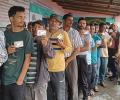
The Election Commission has assured the Supreme Court that no voter's name will be deleted from the draft electoral roll in Bihar without prior notice and a fair hearing. The EC also clarified that it is not required to share separate lists of those not included in the draft rolls.

Expressing surprise over political parties not coming forward in filing objections related to 65 lakh excluded voters, the top court directed the chief electoral officer of Bihar to implead them in the court proceedings.
The Supreme Court has agreed to hear petitions challenging the Election Commission's decision to revise electoral rolls in Bihar. The hearing is scheduled for July 10.
The Supreme Court has directed the Election Commission of India (ECI) to publish details of deleted names from the voters list in Bihar, along with reasons for non-inclusion, to enhance transparency in the special intensive revision (SIR) of the electoral roll.
A bench of Justices Sudhanshu Dhulia and Joymalya Bagchi, however, questioned the timing of the exercise, besides offering its prima facie view that Aadhaar card, voter ID card and ration cards could be considered during the SIR in Bihar.
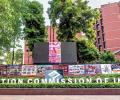
The Supreme Court will hear on February 19 pleas challenging the appointments of the Chief Election Commissioner and Election Commissioners under the 2023 law. The court will take up the matter on a priority basis, after some urgent listed matters. The government has appointed a new CEC and ECs under the new law, which excludes the Chief Justice of India from the selection panel, despite a 2023 Supreme Court verdict directing the inclusion of the CJI in the panel. The petitioners argue that the exclusion of the CJI undermines the independence of the election commission.

The Supreme Court on Monday agreed to hear on May 17 a plea of an NGO seeking a direction to the Election Commission to upload polling station-wise voter turnout data on its website within 48 hours of conclusion of polling for each phase of the Lok Sabha elections.

The National People's Party, which rules Meghalaya, is another national party which received no donations through electoral bonds.

The Supreme Court is scheduled to pronounce its verdict on Friday on a batch of pleas seeking complete cross-verification of votes cast using electronic voting machines (EVMs) with voter verifiable paper audit trail, or VVPAT.

The Supreme Court has adjourned pleas challenging the appointments of the chief election commissioner (CEC) and election commissioners (ECs) under the 2023 law. The court indicated the matter would be listed after the Holi festival break due to a paucity of time. Petitioners, including the NGO Association for Democratic Reforms, argued for an urgent hearing, emphasizing the importance of the issue and the potential impact on democratic processes. The appointment of the new CEC and ECs under the 2023 law, which excludes the Chief Justice of India from the selection panel, has been a point of contention, with petitioners alleging it undermines the independence of the election commission.
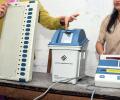
The Supreme Court of India has sought a response from the Election Commission of India (ECI) regarding pleas seeking verification of burnt memory and symbol loading units in Electronic Voting Machines (EVMs). The court directed the ECI to refrain from erasing or reloading data during the verification process and to explain the procedure adopted for verification. The bench also expressed concerns over the high cost of verification and directed the ECI to reduce the fee. The court's directive comes following its previous judgement where it allowed aggrieved candidates to seek verification of EVMs.
A bench of Justices B R Gavai and Vikram Nath said the matter requires to be heard.

A bench comprising Chief Justice of India DY Chandrachud and Justice PS Narasimha said the petitions raise three separate issues and hence, the need to hear them separately.
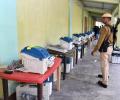
The Supreme Court said on Wednesday it cannot 'control the elections' or issue directions simply because doubts have been raised about the efficacy of Electronic Voting Machines (EVM), as it reserved its judgment on a clutch of petitions claiming the polling devices can be tinkered with to manipulate the results.
"The voter turnout data for the first two phases of the ongoing 2024 Lok Sabha elections published by ECI on April 30 has been published after 11 days of the first phase of polling... on April 19 and four days after second phase of polling... on April 26.

The Supreme Court on Tuesday said it will hear on December 6 the plea of a Congress leader challenging a recent notification by which the sale of electoral bonds has been extended by 15 more days in the year of general elections to legislative assemblies of states and Union territories (UTs) with a legislature.

Writing his views in a separate verdict while concurring with the opinion of Justice Sanjiv Khanna, who was heading the bench, Justice Datta said the question of reverting to "paper ballot system", on facts and in the circumstances, does not and cannot arise.
It will be court's opinion versus the legislative power to enact law, the Supreme Court on Wednesday said as it posted the pleas challenging the appointment of the chief election commissioner and election commissioners under the 2023 law on February 4.
Senior advocate Prashant Bhushan, who appeared for the petitioners in the court, said at least 30 shell companies purchased electoral bonds worth over Rs 143 crore.
 © 2026 Rediff.com - Advertise with us - Disclaimer - Privacy Policy - Sitemap - Feedback - About us - Terms of use - Grievances